

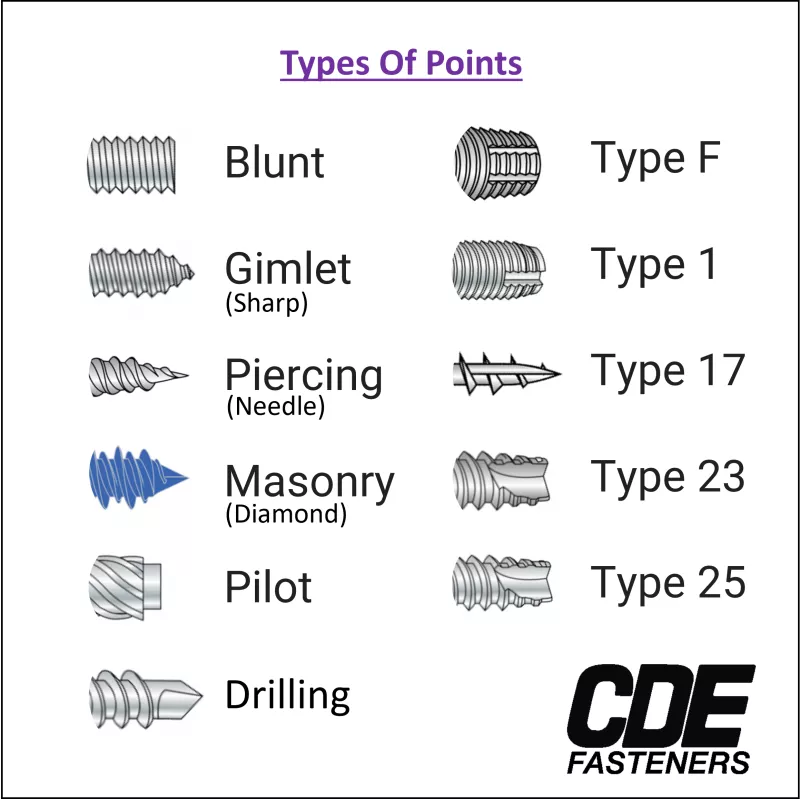
 Fasteners are indispensable in nearly every industry, from construction to electronics, holding materials together securely, ensuring stability and integrity of structures and devices. While many might consider the head or the thread of a screw when choosing a fastener, the point of a fastener is equally critical.
The design of a fastener's point can significantly influence how it pierces material, drives into a substrate, and holds under stress. This guide will explore the various types of fastener points, from sharp to blunt, and discuss their unique applications and advantages in different settings.
Each point of a fastener has a specific purpose and application. Some are used to drill or cut away material while others are designed to mate with a nut or pre-tapped thread. Choosing the correct point is crucial when reviewing the needs for your application. This guide aims to provide some insight into the different types of commonly used fastener points, there are other styles that are not covered by this article.
If you have specific questions about a particular fastener point or do not see what you are looking for here one of our "Certified Fastener Specialists" would be happy to assist here or via the LiveChat!
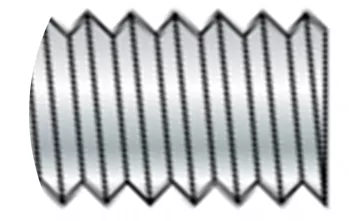 Blunt Point: A Flat, sometimes rounded
Commonly Types: Machine Screw, Hex Bolts, and Type B Self Tapping Screws
Applications: Often paired with a nut or previously threaded hole but not exclusively
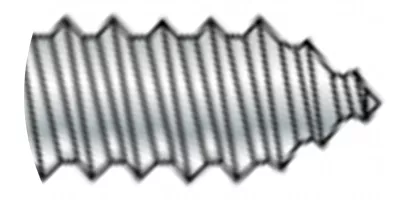 Gimlet Point: A sharp pointed screw with a larger profile. The angle of this point is greater than that of a "sharp" point and is used in heavier duty applications.
Common Types: Commonly Found in Lag Screws, Self Tapping Screws (Type A & AB), Cabinet Screws, and Drywall Screws
Applications: Often used in construction, sheet metal, woodworking, and plastic applications.
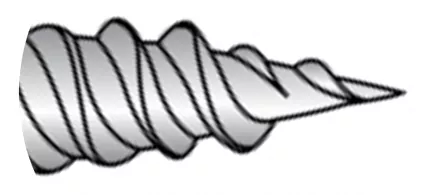 Piercing Point: Often referred to as a needle point, To be used in thin metal (less than 0.050" thick). Eliminates need for pre-drilled holes.
Common Types: Commonly found in Self-Piercing Screws, also known as "Speed Point" or "Zip Screws"
Applications: Most frequently used in gutters but can be used in other thin sheet metal applications
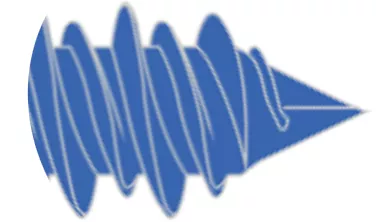 Masonry Point: Also known as a "Diamond" point - A diamond shaped, nail-type point with a double lead thread
Common Types: Used in concrete, block or brick for "masonry" applications.
Applications: A carbide bit is recommended to predrill a hole before installing the concrete masonry screw
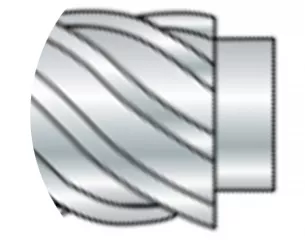 Pilot Point: Contains an initial, smaller diameter protrusion. This assists in the mating and alignment with a predrilled hole and "pilots" the fastener into position with ease.
Common Types: Found in Round Head - Drive Screws. A variation of this point is known as a "Dog Point" which can be used to hold found in set screws, tipped set screws, and some machine screws.
Application: Most commonly used for pressing fasteners into final position with the guidance of the "pilot point" when making permanent fastenings in metal and plastics.
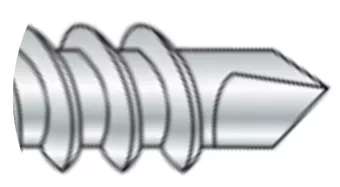 Drill Point: A sharp cutting point like that of a drill bit. This points "drills" through material to assist in installation without the need for predrilling
Common Types: Drill points are found in self-drilling screws. These range from #1 - #5, the larger that number the longer the drill point.
Application: Commonly used in metal roofing, construction, and other heavy-duty applications. For more information on see our blog on self-drilling screws
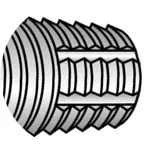 Type F: A blunt, flat tip. The first few threads are tapered with a series of multiple cutting notches (flutes) machined into the tapered threads at the tip
Common Types: Commonly found in "Floorboard Screws"
Application: Good for heavy gauge sheet metal, aluminum, zinc and lead die castings, cast iron, brass and plastic.
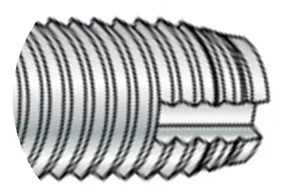 Type 1: Designed for general applications, this single-flute thread cutting screw (commonly referred to as a Type D screw) cuts standard machine threads
Common Types: Thread Cutting Screws with machine screw threads.
Application: An ideal solution for field replacements.
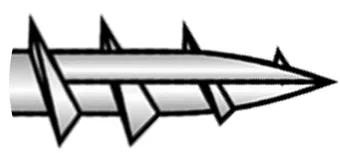 Type 17: Eliminates the need for predrilling. The unique point is long, sharp, and fluted to effectively capture chips, allowing for rapid penetration even in the hardest woods.
Common Types: Commonly found in Deck Screws.
Application: Optimized for use in wood, including dense hardwoods, decking, and particleboard
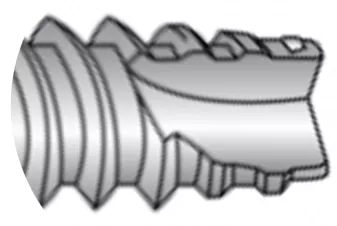 Type 23: Known as a "Type T" thread cutting screw, this fastener features fine machine threads, a blunt point, and tapered entering edges.
Common Types: A versatile choice for materials ranging from steel sheets and cast iron to brass and plastics
Application: This specific geometry maximizes the cutting surface and provides excellent chip clearance, allowing for secure fastening with minimal tightening torque.
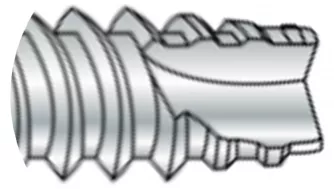 Type 25: Similar to a Type 23 point but utilizes a coarse, spaced thread (Type B) rather than fine threads
Common Types: Plastics, fibrous compositions, and composites where minimizing stress on the material is critical.
Application: Features a blunt point with tapered entering edges and deep chip-removal indentations (flutes).
Conclusion:
Understanding the nuances of fastener points can vastly improve project outcomes by ensuring the right type of fastener is used for the material and purpose. This guide aims to provide a foundational knowledge of fastener point types, enhancing both the selection process and application methods in various industries.